
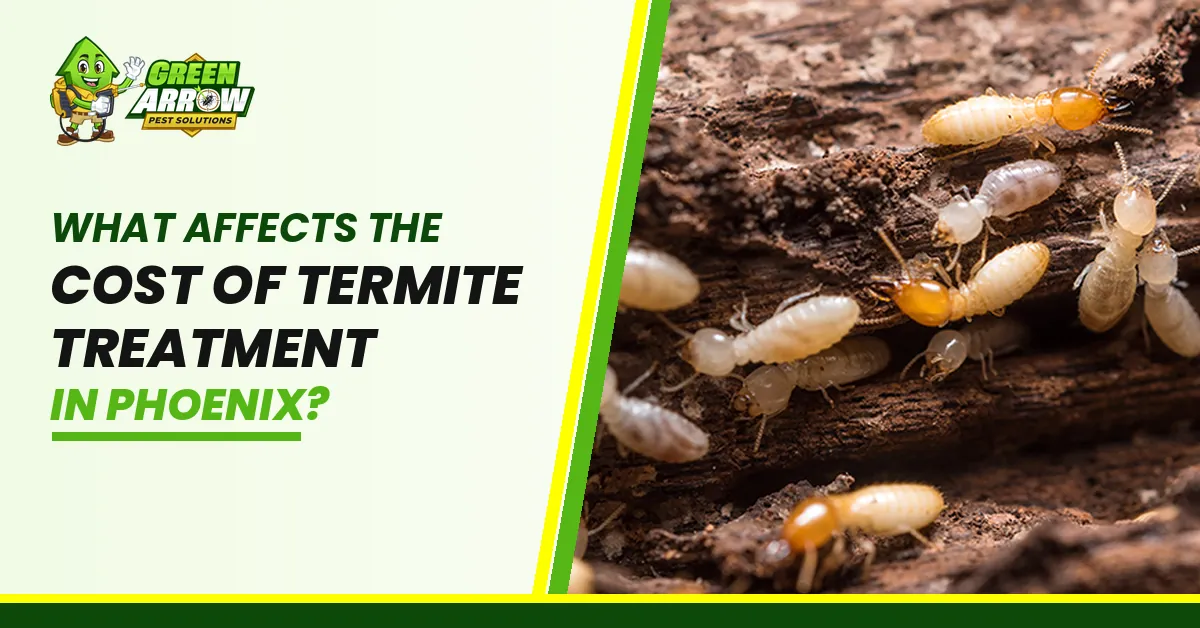
Termite treatment cost in Phoenix comes down to your home, not a flat rate. The size of the home, how much activity is present, how the home is built, the treatment that fits, access, and any past treatment all shape your investment. Below, we walk through each factor in plain terms so you know what to expect before your free inspection.
Six things shape the cost of termite treatment in Phoenix: the size of your home, how much termite activity is present, how the home is built, which treatment fits the activity (bait stations or liquid treatment), how easy it is to reach the areas that need work, and whether the home was treated before. A free inspection shows which of these apply to your home.
A larger home usually means a larger investment, because there is more foundation to protect. A liquid treatment is applied along the foundation, so more linear feet means more product and more labor. With a bait system, a longer perimeter generally needs more stations. Size alone doesn't set the quote, though. Activity, construction and access matter just as much.
Yes. A small, contained area of activity may only need a spot treatment, while activity in several places around the home usually calls for treating the whole structure. During the inspection, the technician checks the foundation, stem walls, garage, expansion joints and interior wet areas, so the plan matches what is actually going on at your home instead of a guess.
Construction changes how the work is done. Many Phoenix-area homes sit on concrete slabs, and treating a slab can mean drilling and filling small holes along joints and penetrations. Post-tension slabs can't be drilled, so they need a different approach. Crawlspaces, additions, patios and block walls each add areas to inspect and treat, which is why construction is a big part of your custom quote.
The right choice depends on the activity we find, not a one-size-fits-all package. A liquid treatment creates a treated zone in the soil around the foundation. Bait stations are set in the ground around the home and work as an ongoing bait system. Some homes are a better fit for one or the other, and your technician explains the recommendation before any work starts.
Access affects how much time and care a job takes. Rock landscaping, concrete patios, pavers, and areas near irrigation lines or buried utilities all take extra work to treat correctly. Rock may need to be raked back and the soil trenched, and concrete may need drilling and patching. Tight attics or crawlspaces add time too. Open, easy access usually keeps the job simpler.
It can. If your home was treated before, we want to know what was done, when, and whether another company's termite warranty is still active. Past treatment records help us decide whether a targeted treatment or a fuller treatment makes sense for your home. If you have paperwork or work orders from a previous company, have them ready for your free inspection.
It can. Termite warranties vary by treatment, and depending on the plan, a warranty may include annual inspections, retreatments and monitoring. Because coverage differs from one treatment to another, your technician explains what the warranty includes for the treatment recommended for your home, so you can compare options with the full picture before you decide on anything.
A technician checks the outside of your home, including the foundation, stem walls, weep screed, expansion joints, garage and any wood touching soil, then the inside, including baseboards, door frames and wet areas. Results are reported as either active termite activity observed or no active termite activity observed at the time of inspection. After that, you get a custom quote.
Two homes on the same street can need very different termite work. One may have a small area of activity on a slab, while another has activity in several spots and limited access. An inspection lets us see your home's size, construction, activity and access, then give you a custom quote so you know your investment before any treatment begins.
Related: Termite control in Phoenix · How to choose a pest control company in Phoenix · Client reviews
Every Green Arrow termite job starts with a free inspection. A licensed technician looks at your home, explains what was found, and recommends bait stations, liquid treatment or a targeted treatment based on the activity. Then you get a custom quote, with no pressure to decide on the spot. We serve Phoenix and nearby cities, including Scottsdale, Mesa, Chandler, Gilbert, Paradise Valley, Tempe, Glendale and Peoria. Schedule your free termite inspection


